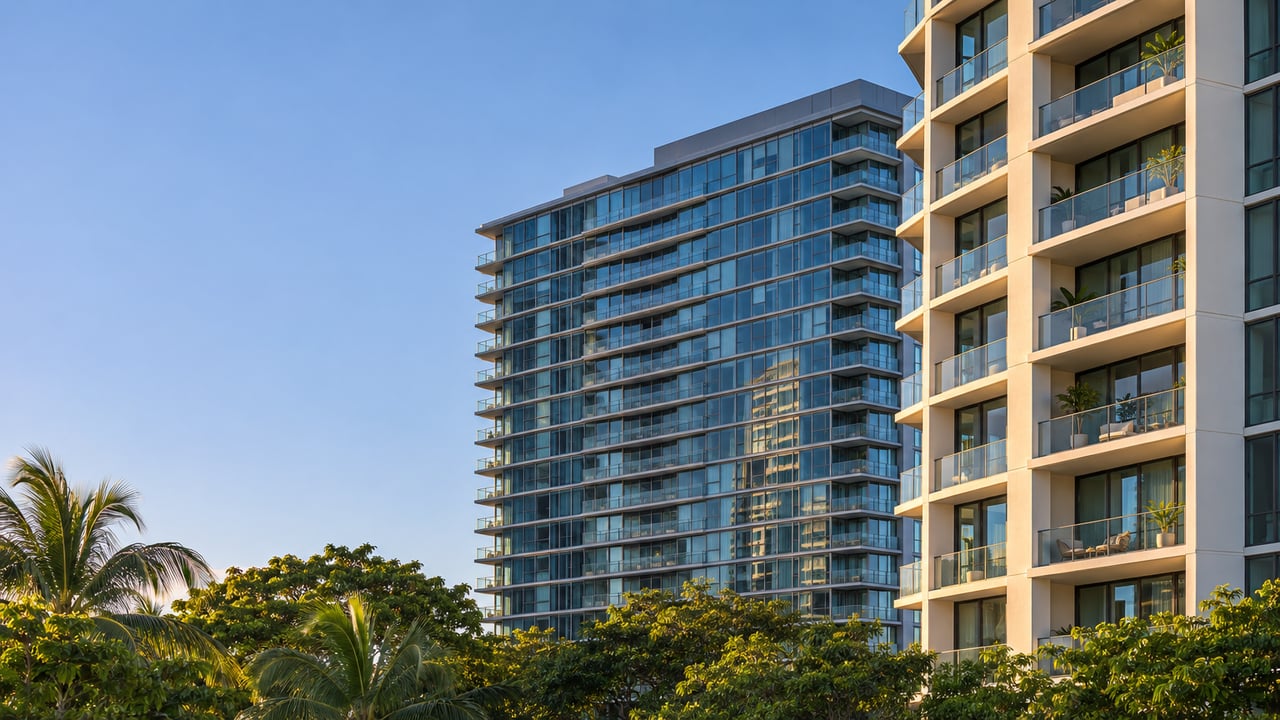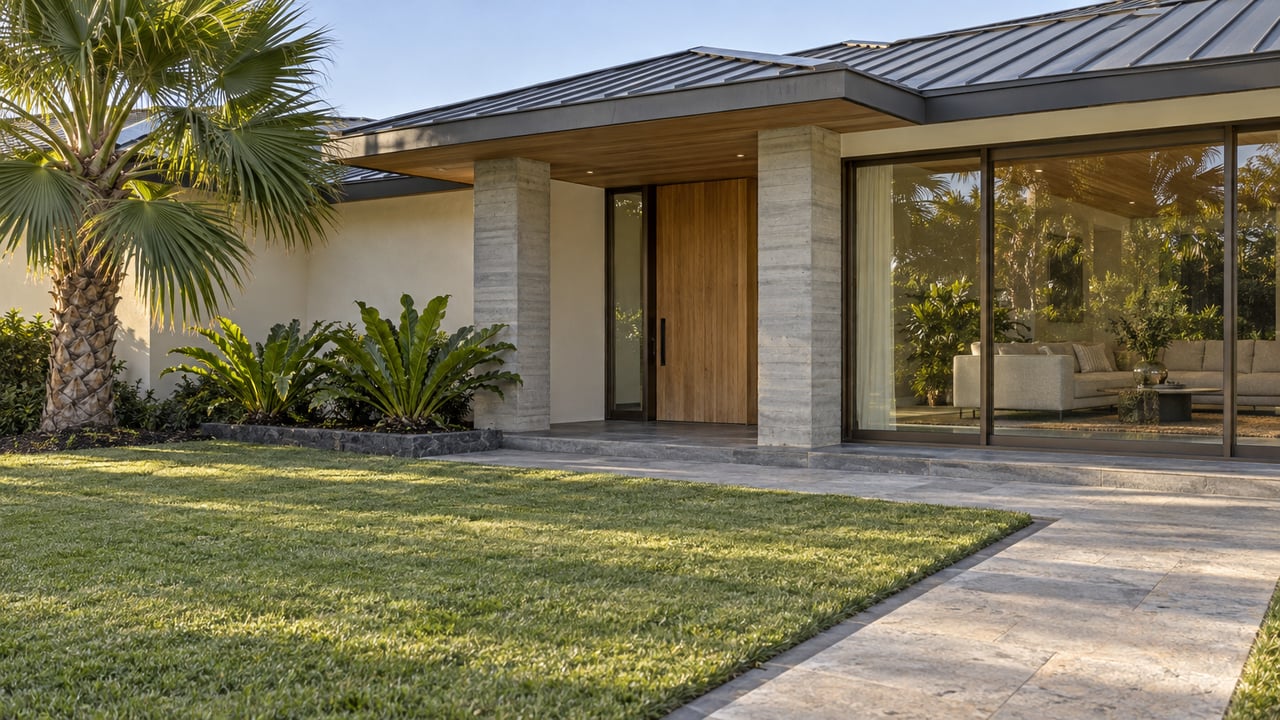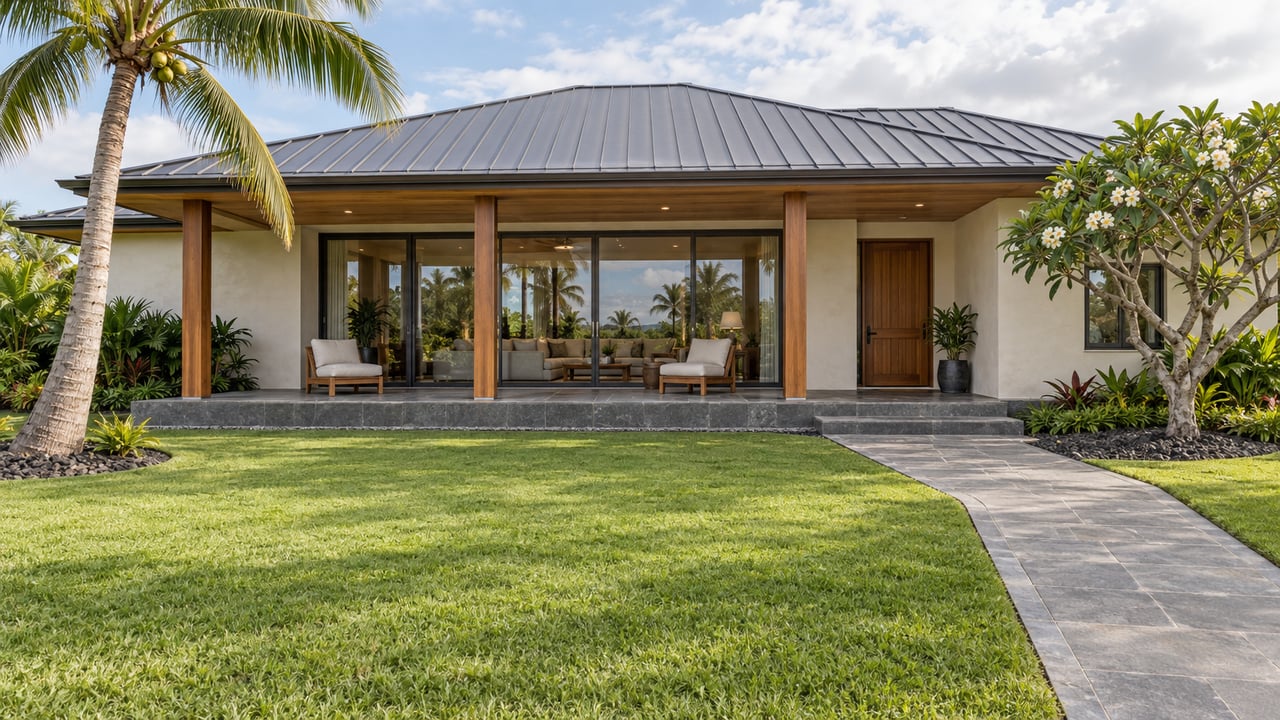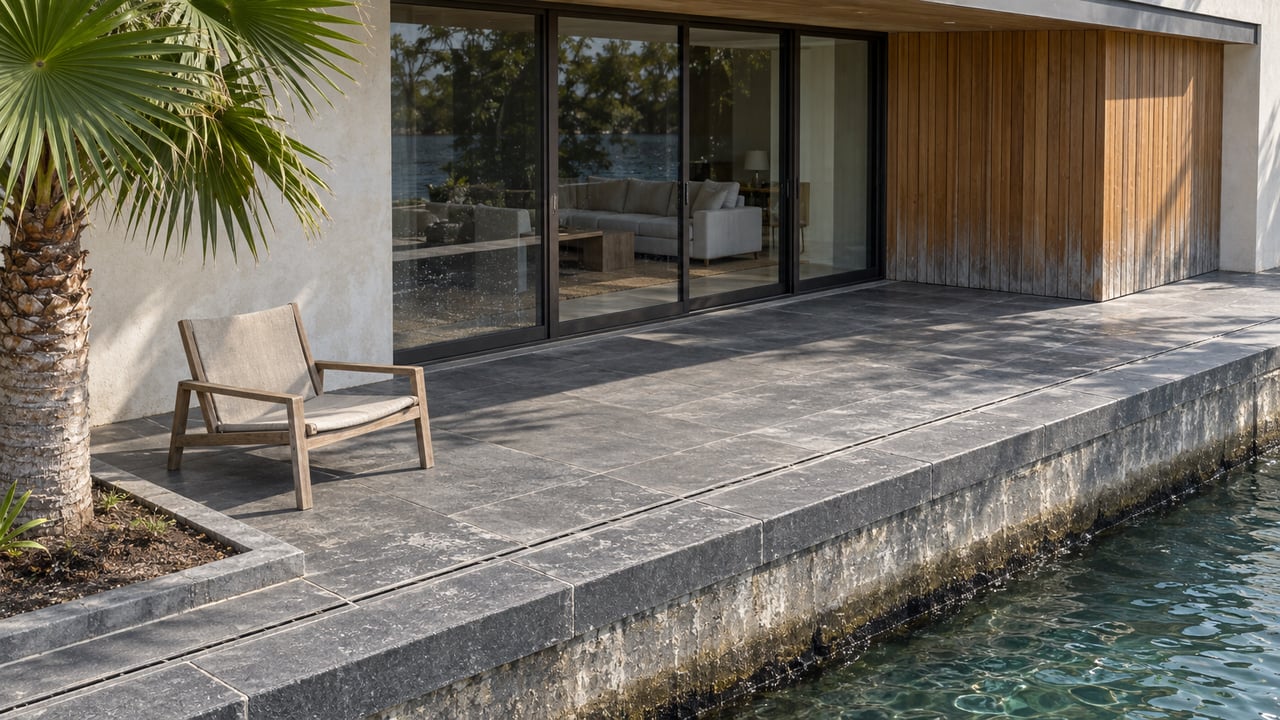
For 2026, the annual dues to the Hawaii Kai Marina Community Association are $600, due January 1. The board approved that budget and fee schedule on October 14, 2025, which included a $25 increase over the year before. For a single-family home with its own frontage on one of Oahu's few private marinas, that is a small number. The dues stay small because the Hawaii Kai Marina Community Association does not pay for the seawall in front of your house. You do.
That split between the water and the wall decides how a marina-front home should be priced, inspected and disclosed. The dues line on a listing sheet reflects what it costs to keep the marina open. The cost of keeping your piece of the shoreline standing appears in other places: the seawall's condition, its permit history, and a few questions that only come up once you are in escrow.
What the Dues Actually Pay For
The marina was once Kuapa Pond. Bernice P. Bishop Estate owned it and leased it to Kaiser Development Company, which developed it. Ownership passed to the Hawaii Kai Marina Community Association in 1991. The water is private because of a 1979 Supreme Court decision, Kaiser Aetna v. United States, 444 U.S. 164, decided December 4, 1979. The Court treated Kuapa Pond as private property under Hawaii law. It held that requiring free public access to the improved marina would be a taking that called for just compensation.
Every marina waterfront lot is subject to a Declaration of Protective Provisions. It grants the right to use the marina and requires the owner to pay assessments for the marina's care, maintenance and operation. The fee schedule shows what frontage is worth. A marina waterfront resident registers a boat for $20 a year. A Hawaii Kai resident who lives off the water pays $575 a year to register the same boat. Waterfront residents can also get one guest boat pass per month through the marina office.
All of these benefits are about access. None of them covers the masonry and concrete at the edge of your lot.
The Wall Belongs to the Lot
The association states the rule plainly:
"The maintenance, repair and if necessary, replacement of waterfront seawalls in the Hawaii Kai Marina, are the sole responsibility of single family dwelling owners (for seawalls in front of their individual homes); the individual condominium associations... and the shopping centers."
For a condo owner on Koko Isle Circle or Kuapa Isle, seawall costs pass through the condominium association. For a single-family owner, the wall is a personal capital expense with no reserve fund behind it.
Public records offer no reliable cost figure for repairing a single-family seawall in Hawaii Kai. The nearest local benchmark is commercial. The Hawaii Kai Shopping Center seawall at 377 Keāhole Street has a city building permit listing an accepted work value of $2,281,980. That wall is much larger than a residential frontage, so the figure does not estimate a home repair. It does show that seawall work here is treated as permitted structural construction. HKMCA said the shopping center work would run from January through July 2026 and asked boaters to pass at no wake or dead slow. The notice has not been updated to say whether the work is finished.
The association also explains why boat speed matters to owners. Wakes can damage seawalls, docks and shorelines, which leads to costly repairs. Marina Patrol can cite boats that throw excessive wake. The association enforces the speed rules, but the owner pays for the damage they are meant to prevent.
A Repair Can Need Several Layers of Permits
How much a seawall costs depends partly on which agencies have to approve the work. That depends on the specific wall, the scope of work and where the work happens. For a Hawaii Kai marina lot, the possible layers include:
- City coastal permits. Honolulu's Department of Planning and Permitting says coastal development can require Special Management Area and shoreline-area permits, and that these are generally processed before most zoning permits. General repair and maintenance in the SMA is exempt. Other development on a shoreline lot can qualify for a minor permit up to a $500,000 valuation, with a 45-day decision target once the application is complete. Above $500,000, an SMA Major Permit requires a neighborhood board presentation, a public hearing and City Council action.
- Shoreline setback. Seawalls are not on DPP's list of minor shoreline structures. Work in the setback area that does not qualify as minor goes through a shoreline setback variance, which carries a $400 review fee and a $2,000 processing fee. The variance process includes newspaper notice at least 20 days before a public hearing and a decision within 45 calendar days after the hearing.
- Federal and state water permits. The Army Corps of Engineers Honolulu District lists shoreline stabilization among the activities that can trigger Rivers and Harbors Act Section 10 or Clean Water Act Section 404 review. A Corps project may also need State Department of Health water quality certification, which is often reviewed at the same time.
One rule in this list matters most at resale. Honolulu's Department of Planning and Permitting says a legally established seawall that no longer meets current rules can be repaired without a variance only if the work does not make it more nonconforming. The value of that work over 10 years also has to stay at or below 50 percent of the replacement cost for the portion within 60 feet of the shoreline, or 75 percent beyond 60 feet. Because the window is 10 years, repairs a seller made in recent years count against the same limit a buyer will face. A wall that has been patched several times may have little room left before the next repair requires a variance. The previous owner's repair receipts are part of what you are buying.
The Dock Depends on Your Neighbors' Lot Lines
Under HKMCA's dock guidelines, owners can install or modify docks on the marina side of their homes once the Marina Manager approves them. Any dock that extends over the seawall, including floating and cantilever docks, needs HKMCA's written authorization, plus approval from the local community association where one applies. A dock normally has to sit at least five feet from a single-family side lot line. A docked boat has to stay outside the neighbor's projected mooring zone. On a narrow lot or one on a curve, these limits decide what size boat can tie up at the house.
The guidelines also make the homeowner liable for building and maintaining the dock, and they say HKMCA approval does not mean the dock complies with government permits. Those dock guidelines are still marked "Revised July 2022." At the January 13, 2026 meeting, the committee chair suggested adding a review of rules on mooring and floating docks that impede neighboring property lines to the next month's agenda. On February 10, the committee postponed the topic to the next meeting. The minutes posted on the association's board-meetings page run through February 26, 2026. If a buyer is counting on a dock setup that crosses a side line, it is worth asking the marina office directly whether that rule has changed.
Bridge clearance limits boat choice as well. Bridges inside the marina clear about 13 to 19 feet at mean lower low water, and shallow areas make high-masted or deep-keel sailboats hard to handle. Getting out to the ocean got easier this year. DLNR finished its improvements at the Maunalua Bay boat ramp facility in February 2026, two months ahead of the April estimate. The work included channel and ramp dredging, seawall repairs and expanded parking and canoe storage.
Where Disclosure Law Applies and Where It Is Unclear
Hawaii's seller disclosure law has a shoreline provision. When residential property "lies adjacent to the shoreline," the seller must disclose all permitted and unpermitted erosion control structures, permit expiration dates, notices of alleged violation and related fines. Whether a lot facing an interior private marina counts as "adjacent to the shoreline" under that section is a question for your attorney. The statute does not answer it for Hawaii Kai specifically. A careful buyer can ask the seller for the seawall's permit history regardless, and a careful seller can volunteer it.
The rules on association documents are clearer. Under Hawaii's seller disclosure law, when a home is subject to a recorded declaration, the seller must provide the declaration, bylaws and the rules on use, maintenance and assessments. That duty can also cover unrecorded guidelines issued by the entity that enforces them. The buyer then has 15 calendar days after receiving the disclosure statement to review it and rescind, unless both sides agree in writing to a different period.
Those 15 days are short. In August 2026, the median single-family home across Oahu sold in 17 days at a median price of $1,240,000, up 12.2 percent from a year earlier. Closer to the marina, the Honolulu Board of REALTORS' July 2026 report noted that condo pending sales in the Hawaii Kai region rose 16.7 percent year over year. In a market moving at that pace, a buyer who waits for the disclosure packet before ordering a seawall evaluation may not get the evaluation back in time.
The Water Quality Reports
HKMCA posts water testing results. In the August 2026 samples, the Kaalakei Valley Spillway measured 7,700 MPN per 100 mL of Enterococcus, against a single-sample threshold of 130 printed on the report. Both water-sport areas tested below 10. The association advises that water can exceed recreational levels after heavy rain. Its deed summary also acknowledges that the sewer system could overflow into the marina. It describes the basin as a catchment for runoff sediment that needs regular maintenance dredging. A buyer can ask the marina office about the timing and funding of the next dredging cycle.
The board is also spending on the marina's own facilities. It approved a $10,000 topographic survey of the Yacht Club Site in January 2026 and a $125,400 grading proposal from American Marine on February 26, 2026. The minutes do not say how either project is funded.
What to Request Before the Rescission Window Closes
- The property's current HKMCA account status, confirming 2026 dues are paid and no charges are outstanding.
- The Declaration of Protective Provisions and the current marina Rules and Regulations.
- Every city permit, variance or Army Corps authorization on file for the seawall, along with dates and costs of past repairs, so you can test them against the 10-year nonconforming-repair limit.
- The HKMCA dock approval for any existing dock, plus any separate government permits.
- An independent structural evaluation of the seawall, ordered as soon as the contract is signed.
- The marina office's answer on whether any board decisions since February 2026 affect docks, assessments or funding for the Yacht Club Site.
Frequently Asked Questions
Do the marina dues cover seawall repairs? Not for single-family homes. HKMCA assigns maintenance, repair and replacement of the wall in front of a single-family home to its owner. Condominium associations and shopping centers handle their own walls.
Is the Hawaii Kai Marina open to the public? The marina is private property, a status confirmed by Kaiser Aetna v. United States in 1979. Use is governed by the association's rules and fee schedule.
Can I build a bigger dock after closing? Possibly, but it needs HKMCA approval, has to meet side-setback and mooring-zone limits, and may need separate government permits.
If you are considering a home on the Hawaii Kai Marina, the seawall file deserves as much attention as the listing price. Real Select Vacations can help you gather the association documents, permit history and inspection timeline before your review period begins, with bilingual support for buyers abroad. Let's Connect.
This article is general information, not legal, tax or financial advice. Consult a qualified professional about your situation.