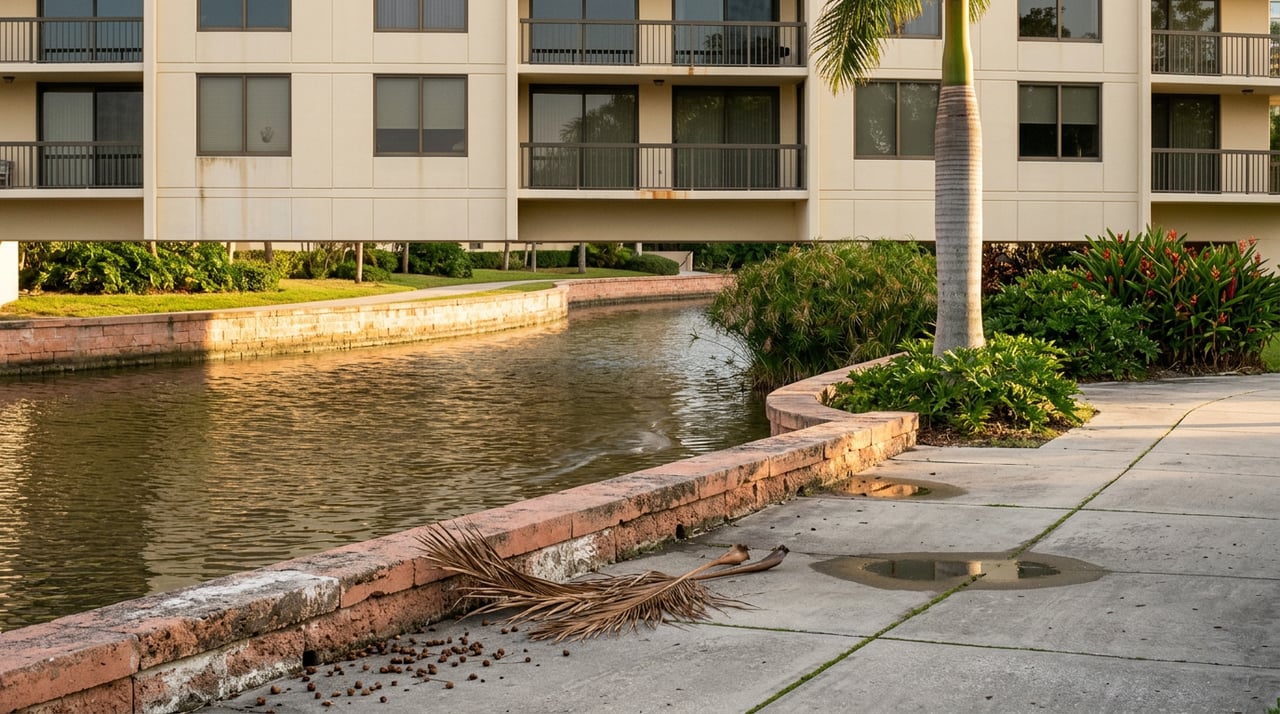
"A mammal swimming in the canal is telling us the technology is doing what we hoped it would." Dr. Ken Kaneshiro told KHON2.
That's Dr. Ken Kaneshiro, director of the University of Hawaii's Center for Conservation Research and Training, talking about a monk seal spotted in the Ala Wai Canal earlier this year. If you walk or run the Ala Wai Promenade on any given morning, you already know the canal has a reputation problem. What you may not know is that the project has a public goal of making the canal fishable and swimmable again by 2026, and that this is also the year another group of scientists published data suggesting the fix might be making things worse. Both things are true at the same time, which tells you something the swim test never could.
The Project’s Public 2026 Goal
In 2019, the Hawaii Exemplary State Foundation launched something called the Genki Ala Wai Project with a specific, public target: make the canal fishable and swimmable again by 2026. The method is almost absurdly simple. Volunteers hand-form balls of clay soil, rice bran, molasses, and a proprietary blend of effective microorganisms, let them harden for two weeks, then toss them into the canal to digest the sludge sitting at the bottom.
By Earth Day this year, the project had crossed 300,000 genki balls deployed since it started. Kaneshiro says the sludge layer at the Kapahulu end of the canal, near the Ala Wai Community Gardens, has gone from 18 to 20 inches thick down to two or three, thin enough in places to see the sandy bottom underneath. Project organizer Kouri Nago describes a visible progression as the sludge clears: plankton first, then worms and clams and small fish, then the bigger animals that come to eat them. Native moi and ama ama have been documented. So has kagami, a predatory fish usually found well out in open ocean.
That is the optimistic version of the story, and it is the version most residents have heard secondhand, if they've heard it at all.
What the Water Testing Actually Shows
The water-quality testing adds another part to the picture. The Genki Ala Wai Project tracks its own progress through state health compliance testing for enterococci, the bacteria indicator used to judge whether water meets recreational safety standards. Nago says the canal met that standard only 44 percent of the time in 2020. By 2025, he says it was topping 70 percent.
At almost the same moment, Hawaii Pacific University ran its own tank experiment on genki balls, led by professors Carmella Vizza and Olivia Nigro. Their finding was the opposite of encouraging: in a controlled tank, genki balls decreased oxygen levels and increased nutrients and bacteria, both immediately and over the following year. And out in the actual canal, the Surfrider Foundation's Blue Water Task Force recorded its highest-ever enterococci reading at the Magic Island Canoe Launch following a flooding event in December 2025, the kind of storm runoff that swamps any water-quality gain a slow biological process might otherwise make.
Project organizers argue the tank study doesn't reflect real-world canal conditions, and there's a fair case for that. A sealed tank with no tidal flushing, no rain dilution, and no ocean exchange is a genuinely different system than a two-mile tidal canal that empties into the Pacific. But the HPU findings and the record bacteria spike both landed in the same twelve-month window as the project's most optimistic wildlife reports, and a resident deciding whether to let a dog wade in near the community garden deserves to know both halves of that picture, not just the half with the monk seal in it.
The species now documented or reported in and around the canal include:
- Monk seals, an endangered native species
- Moi and ama ama, both native Hawaiian fish
- Kagami, a predatory fish typically found offshore
- Worms, clams, and small crustaceans at the base of the food chain the project says has returned first
None of that makes the canal swimmable. The Department of Health has never lifted its standing caution against entering the Ala Wai itself, and nothing in this year's data changes that. What it does mean is that the story residents have been telling each other, that the canal is simply a lost cause, is at minimum incomplete.
The Part That Doesn't Depend on a Microbe
While the water-quality debate plays out in dueling studies, something else happened this month that doesn't require anyone to trust a bacteria count. On August 12, 2026, the Federal Highway Administration, the U.S. Fish and Wildlife Service, and NOAA's National Marine Fisheries Service jointly issued final approval for the Ala Wai Bridge Project, a new pedestrian and bicycle bridge across the canal that will connect Waikiki, McCully, and Mōʻiliʻili. The federal notice was published five days later, and it starts the clock on a legal challenge window that closes in mid-January 2027, which is bureaucratic language for "this is as close to final as a federal infrastructure approval gets."
Right now, if you're on foot or on a bike in Waikiki and you want to cross the canal, you're routed to one of three existing crossings at McCully Street, Kalakaua Avenue, or Ala Moana Boulevard, all of which were built for cars first. A dedicated pedestrian and bike bridge is a different kind of neighborhood change than a water quality percentage. It doesn't get revised by a follow-up study. It gets built, and then it's simply there, shortening the walk between three neighborhoods that currently share a canal but not much foot traffic.
What Any of This Means for Your Actual Morning
If you already live along the Ala Wai, here's the practical version. The promenade itself, running along the northwest bank of the canal, remains one of the better low-key walking and running routes in Waikiki, and it's been getting more interesting to look at rather than less. Paddlers still launch from the Waikiki Surf Club boat launch site, and the canoes waiting there on any given morning are part of the same daily rhythm they've always been. The Ritz-Carlton Residences, Waikiki Beach now runs genki ball-making as one of its guest experiences, so if you've noticed small groups working with buckets of mud near the Diamond Head Tower porte cochere on a weekend, that's what they're doing.
What's genuinely different this year is that you can watch for wildlife you would not have expected a few years ago, while also knowing that watching for wildlife is not the same as water quality clearance. Canal-adjacent living in Waikiki has always meant living next to a working piece of 1920s drainage infrastructure, built between 1921 and 1928 to convert what was once wetland, taro fields, and fishponds into buildable land. Nearly two miles long and 200 feet wide, the canal was never designed with recreation as its primary purpose, and the current push to change that runs on two tracks at once: a contested biological experiment that's genuinely uncertain, and a federally approved bridge that isn't uncertain at all.
The 2026 target for a swimmable canal is not going to be met by December, whatever the compliance percentage says by then. But the neighborhood is still visibly different this year than it was two years ago, just not for the reason most people expected. The proof isn't in the water. It's in a federal approval letter for a bridge that didn't exist last summer.
If you're weighing what any of this means for property near the Ala Wai, whether you already own here or you're watching the corridor from a distance, Real Select Vacations can walk you through it with the same on-the-ground read we just gave you on the canal itself. Let's Connect.
This article is general information, not legal, tax or financial advice. Consult a qualified professional about your situation.