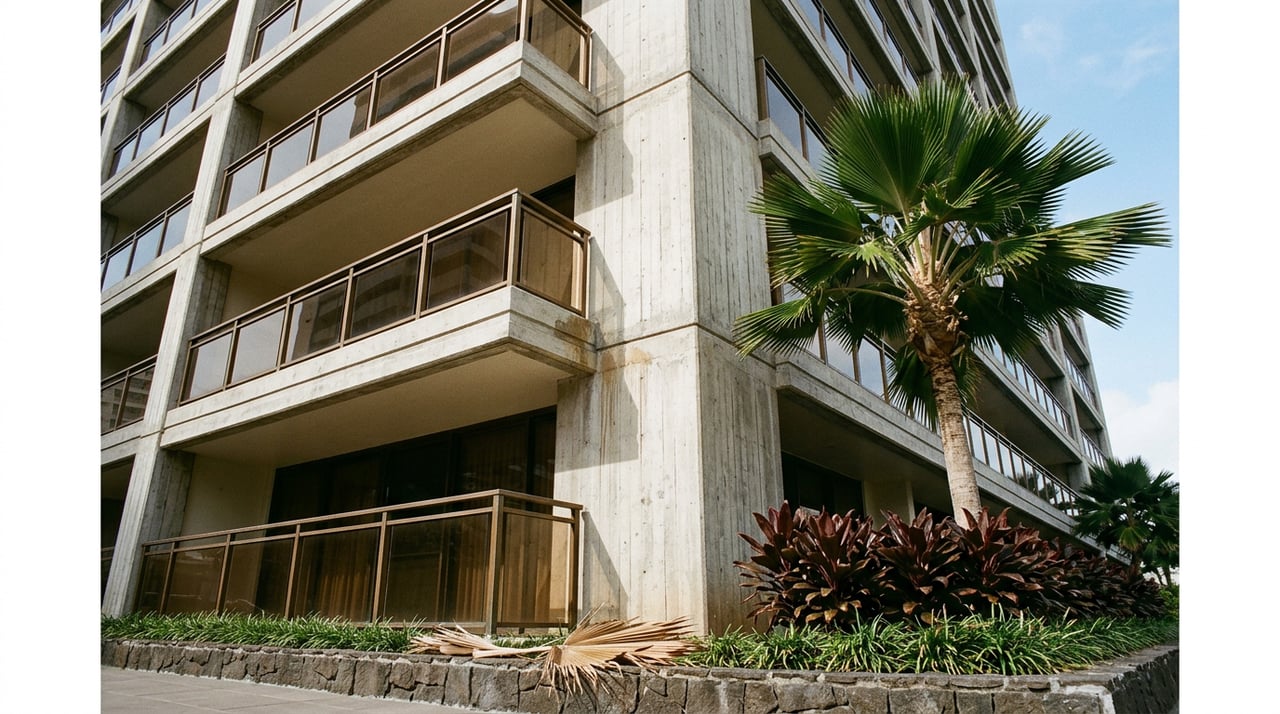
A two bedroom unit at Waikiki Beach Tower once listed for $999,999, a price that looked like a steal for an ocean view high rise until a buyer read past the square footage. The unit sat on leasehold land, and Hawaii Business Magazine reported at the time that the buyer would take on lease rent, maintenance fees, and property tax totaling close to $6,000 a month. A fee simple unit in the same tower carries no lease rent at all, because there is no ground lease attached to it. Same building. Two entirely different cost structures, and neither one is visible from the listing photos.
That gap is not a pricing quirk specific to one tower on Kalakaua Avenue. It is the mechanism behind why Waikiki's condo market behaves differently from the rest of Oahu's housing market right now, and it is the reason a buyer comparing two listings with nearly identical asking prices can end up choosing very different long-term costs. The thesis is simple: in Waikiki, the list price is the least reliable number on the page. Land tenure and building-level special assessments do more to determine your real monthly cost than square footage, floor, or even view.
The Land Underneath the Building Is Often Not for Sale
Waikiki's ownership structure traces back to how land was divided during the Great Mahele of 1848, when large tracts passed to a small number of royal family members, chiefs, and the government. Much of that land, including a substantial share of what became Waikiki, ended up in the hands of Bernice Pauahi Bishop's estate, now Kamehameha Schools, still the largest private landowner in the state. When a Waikiki condo was built on that land, the developer often built the structure but never owned the ground beneath it. Buyers get a lease instead of a deed to the dirt.
At Waikiki Beach Tower specifically, the building carries a mix of fee simple and leasehold units, and on the leasehold side the ground lease runs through 2039. That date matters more than it looks. Lenders generally want the remaining lease term to outlast the loan term by a meaningful margin, so a buyer planning a standard 30-year mortgage on a Waikiki Beach Tower leasehold unit today would already be running into that ceiling.
Kamehameha Schools is not the only landowner in play. The Admiral Thomas building sits on land owned by the First United Methodist Church next door, with a lease that runs through 2046 and a rent renegotiation that Hawaii Business Magazine reported was coming due this year. A longtime resident who bought his unit after renting in the building since 1980 put it plainly in that same reporting: "The Admiral Thomas still remains a quality building, in a great location." His point was that leasehold status alone does not determine a building's desirability. But it does determine what a buyer owes every month, and whether that number can change at a specific point on the calendar. A buyer evaluating this building today should ask directly whether that renegotiation has already concluded and what the new rent looks like.
Roughly one in ten Oahu condos sits on leasehold land today, and that share is concentrated almost entirely in Waikiki, downtown, Makiki, and the area around the University of Hawaii, according to figures compiled from Honolulu Board of Realtors data. In a fee simple neighborhood, this conversation would not come up. In Waikiki, it comes up on nearly every tenth listing.
The Second Number Lives in the Association Minutes, Not the Listing Sheet
Land tenure is the number a buyer can usually find in the listing. The second number, the one that requires actually reading the association's meeting minutes and reserve study, is the special assessment.
The Department of Commerce and Consumer Affairs describes special assessments plainly: they are a legal, if disruptive, way for a condo association to fund necessary repairs that were deferred or unforeseen, things like spalling concrete, fire safety upgrades, or pipe replacement. Waikiki's building stock, much of it dating to the 1960s and 1970s, is exactly the kind of inventory where these projects surface.
Three current examples make the pattern concrete:
| Building | What triggered the assessment | Monthly cost | Runs through |
|---|---|---|---|
| Waikiki Sunset | AC fan coil replacement, completed 2025 | $253 to $295 for one bedroom units, $582 to $660 for two bedroom units | December 2028 |
| Kuhio Village | Spalling repair and building repainting, completed 2021 | $93.97 | December 2027 |
| Ka La'i Waikiki Beach, formerly Trump Tower Waikiki | Building-wide renovation, 2025 to 2026 | Active, tied to ongoing project | Not yet finalized |
Notice that Waikiki Sunset's project already finished in 2025 and the building is still collecting the assessment through 2028. That is normal. A special assessment is frequently financed over several years rather than paid in one lump sum, so a buyer looking only at whether the repair is complete can miss that the bill is still running. The listing may say the work is done. The monthly obligation says otherwise.
Kuhio Village shows the other side of the same coin: a smaller, nearly finished assessment on a building that has otherwise modernized its access systems and security, evidence that a modest ongoing charge does not mean deferred maintenance elsewhere. Ka La'i Waikiki Beach shows a project still in motion, which means the final total is not yet fixed.
None of this makes any of these buildings a bad purchase. It means the true monthly cost of ownership is the maintenance fee plus whatever the association minutes say about assessments, not the maintenance fee alone.
Why an Unpaid Assessment Can Still Be a Buyer's Problem
Hawaii law gives condo associations an unusual amount of leverage when an assessment goes unpaid, and it is worth understanding before closing. Under the Condominium Property Act, a lien for unpaid assessments attaches to the unit automatically the moment a payment is missed, with no court filing required. State law also gives the association priority over the first mortgage for up to six months of unpaid assessments, a provision sometimes called the six-month super-lien, as described by attorneys who represent Hawaii condo associations.
This is precisely why the due diligence question is not simply "is there a special assessment." It is whether the seller has paid the assessment in full, whether it is being paid off at closing. Some Waikiki listings spell this out directly, noting that the seller will pay off the special assessment at closing. Others fold ongoing assessment payments into a monthly figure that looks like a maintenance fee but is not.
What This Does to Waikiki's Numbers Right Now
Here is where the two variables show up in the market data. Oahu's single-family home median reached $1,224,500 in July 2026, while the condo median sat at $504,500, according to the Honolulu Board of Realtors. That gap is not new, but the direction is telling. In the board's March 2026 report, the condo median rose a modest 2.0% year over year while median days on market for condos climbed from 40 to 43 days, even as single-family homes kept selling in three weeks or less. Condos, and Waikiki condos in particular, are taking longer to move.
Waikiki carries a heavier share of exactly the two factors that slow a transaction down: leasehold land tenure that narrows the buyer pool and complicates financing, and older buildings where deferred capital repairs eventually become special assessments. A buyer with cash and patience can turn both of these into negotiating leverage. A buyer relying on standard 30-year financing needs to know which listings they can even qualify for before falling in love with a view.
A Short Checklist Before You Write an Offer
Bring these questions to any Waikiki showing, and ask for written answers, not verbal reassurance:
- Is the unit fee simple or leasehold, and if leasehold, how many years remain on the ground lease
- When is the next lease rent renegotiation, and what formula does the lease use to set the new rent
- Is there an active special assessment, and if so, what triggered it and when does it end
- Has the association completed a reserve study recently, and what percentage of recommended reserves is currently funded
- Will the seller pay off any remaining assessment balance at closing, or does it transfer to the buyer
The answers can help you assess the unit's costs and terms before making an offer.
Frequently Asked Questions
Can I get a standard mortgage on a leasehold Waikiki condo? It depends entirely on how many years remain on the ground lease. Lenders typically want the lease term to run well past the loan term, often by a margin of several years, so a 30-year mortgage becomes difficult once the remaining lease term drops into that range. A cash purchase avoids this restriction entirely, which is part of why leasehold units in Waikiki often draw a different buyer profile than fee simple ones.
Is leasehold always the cheaper option? Usually, but not always in the way it first appears. The purchase price is typically lower, sometimes dramatically so, but the ongoing lease rent, the eventual renegotiation, and the narrower resale pool all factor into the real cost of ownership over time. The right comparison is total cost across the years you plan to hold the unit, not the price on day one.
Waikiki rewards buyers who read past the first page of a listing. If you are comparing units in this market and want someone who will walk through the lease terms, the reserve study, and the assessment history with you before you write an offer, Real Select Vacations is ready to have that conversation. Let's Connect.
This article is general information, not legal, tax or financial advice. Consult a qualified professional about your situation.