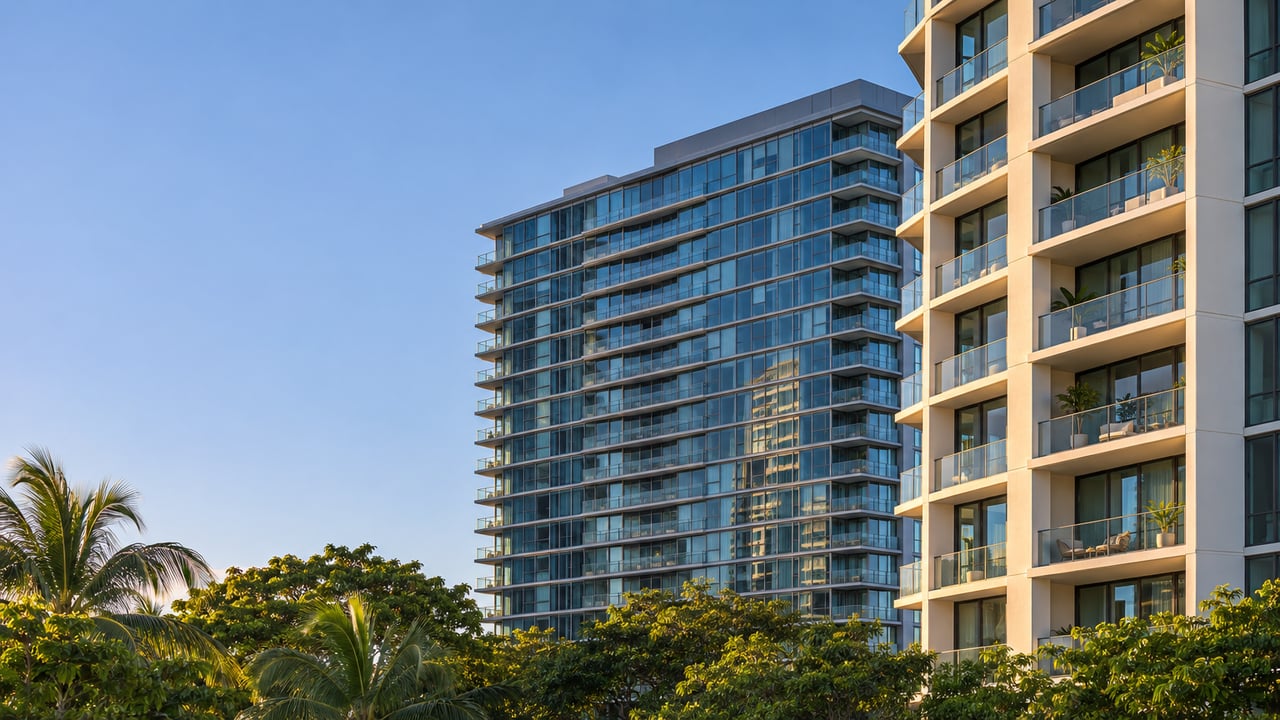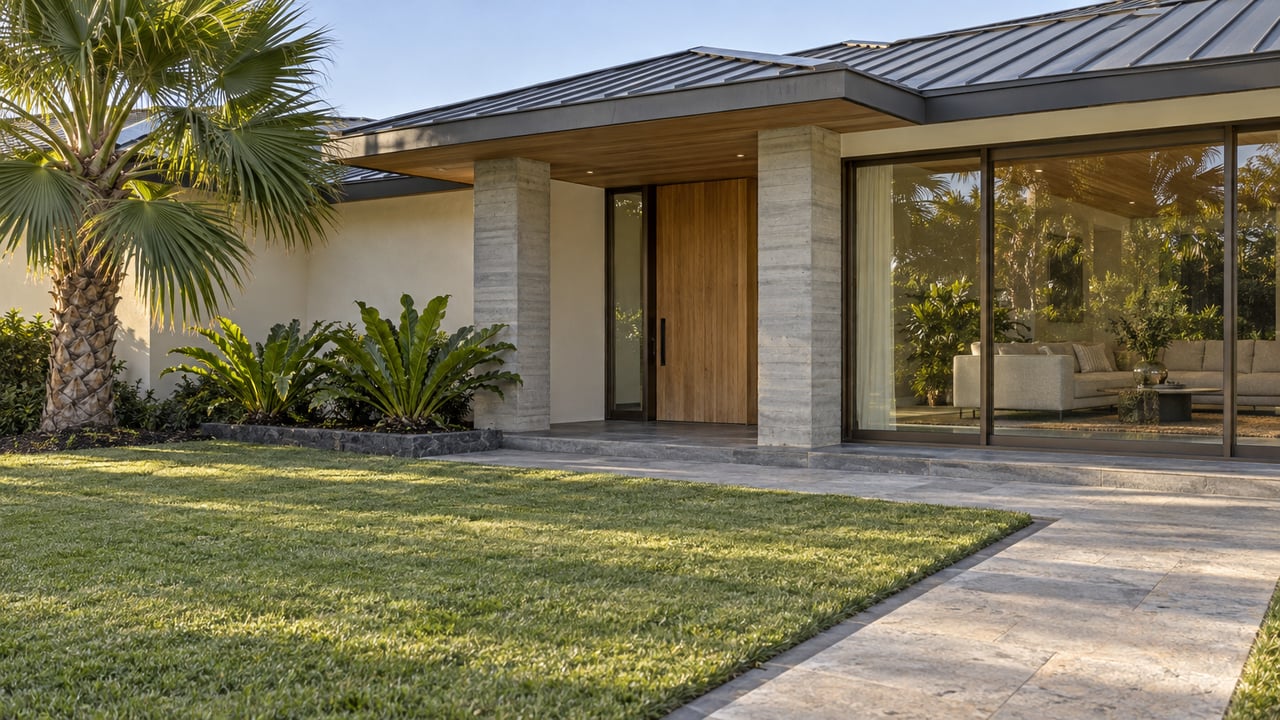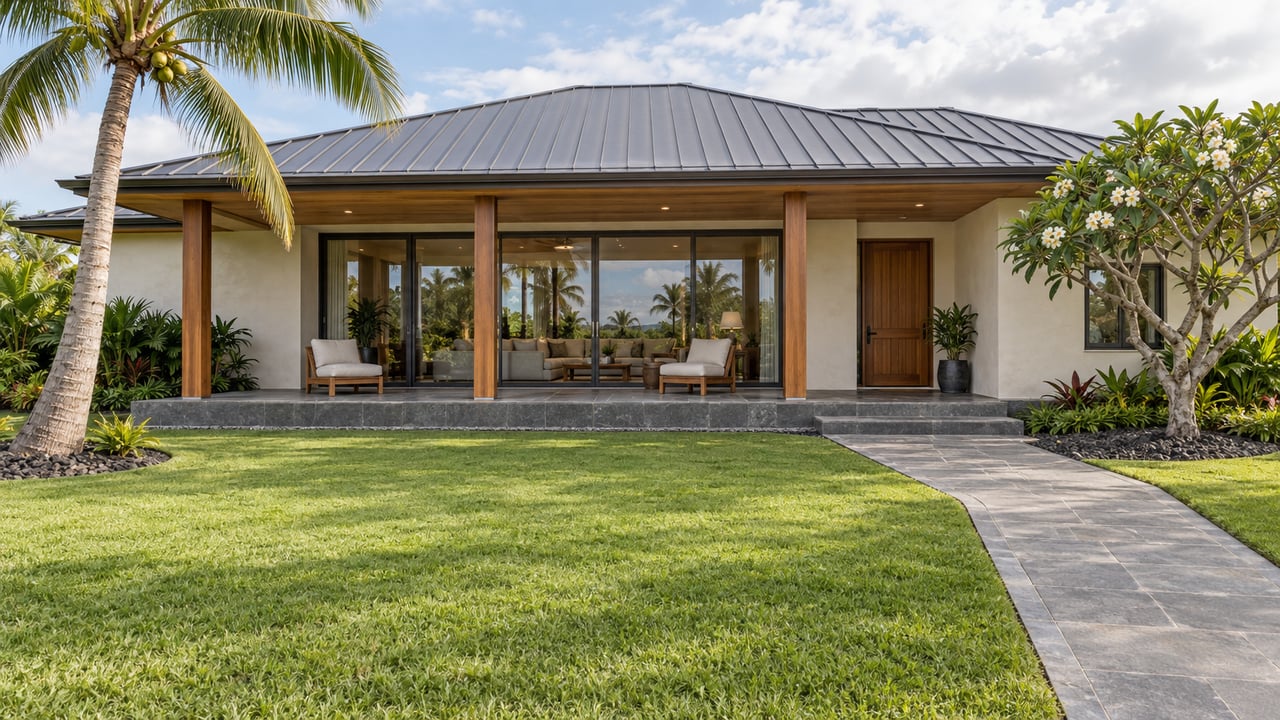
A buyer who falls for a floor plan at Nahele, one of the newer condo phases inside the Ho'opili master plan, will run into a wall that has nothing to do with price. As of the most recent phase updates, active litigation at Nahele is currently blocking VA, FHA, USDA, and conventional financing on that specific product. The homes are real, priced, and available. The loans most buyers actually use to purchase them are not.
That single detail is worth sitting with, because it is a small, sharp example of a much bigger pattern in Kapolei. This is a market where the product you are comparing matters as much as the price tag attached to it, and where the same three letters, K-A-P, can describe five different things depending on which data provider drew the boundary and which month they drew it in.
A Builder That Never Stops Releasing Inventory
Ho'opili is not a single project that sold out and moved on. It is a 20-year build-out by D.R. Horton, and new phases have been releasing on a rolling 30-to-60-day cadence throughout 2026. Uluwehi released condos in March at roughly $487,000, then again in June at roughly $497,000. Kāpili released townhomes in March at roughly $645,000, then in June at roughly $660,000. Nanahea moved from a May release near $926,000 to a July release near $1,032,000. 'Ahakea opened its first phase in January at roughly $718,000.
By late August 2026, five phases were actively selling at once: Uluwehi condos from $489,950, Alana townhomes and FLEX homes from $556,480, Kāpili condos from $654,945, 'Ahakea detached homes from $763,240, and Nanahea single-family homes from $925,990, though Nanahea's remaining inventory was already under contract. Three earlier phases, Noho Papa, Mōlehu, and Ikena, had already sold through and closed out in the first half of the year.
What this means for anyone trying to sell an existing home nearby is straightforward. A resale seller in an older Kapolei subdivision is not just competing against other resale listings. They are competing against a builder who can always answer a stalled negotiation by opening a new phase with a fresh price, current finishes, and a manufacturer's warranty. That is a different kind of competition than most resale sellers on Oahu are used to, and it behaves like a ceiling more than a floor. Buyers who feel a resale price is a stretch have a real, financeable, DR Horton-backed alternative to wait for, most of the time.
Same Zip Code, Different Median Numbers
Because Kapolei, Ho'opili, and East Kapolei sit on top of each other geographically, different data providers draw the line in different places, and the resulting medians disagree in ways that would be alarming if you didn't know why.
| Boundary used | Time window | Median price | Days on market |
|---|---|---|---|
| EWA / East Kapolei (includes Ho'opili) | February 2026 | $752,000, down 7.2% year over year | 96, up from 92 |
| Makakilo-Kapolei-Honokai Hale | February 2026 | $800,000, down 6.8% year over year | 123, up from 78 |
| Kapolei (sold, per aggregated MLS figures) | May 2026 | $715,475 | 59, up from 46 |
| Kapolei (listing side) | April 2026 | $763,472 asking versus $671,330 sold | 54 |
| Ewa Beach, for contrast | April 2026 | $770,000 asking versus $780,000 sold | 36 |
Read across that table and the spread is not small. Two boundaries measured in the same month, February 2026, produced medians $48,000 apart. A separate estimate tool showed Kapolei's typical home value at $861,101 in July 2026 on one page and $845,690 on another page for what was functionally the same zip code, in the same month, from the same provider.
None of this means the data is wrong. It means "Kapolei" is not one market. It is a resale core built out over the past two decades (the Villages of Kapolei, Kapolei Knolls, established Makakilo streets) sitting directly beside a builder's active pipeline that some providers fold into "Kapolei" and others carve out as "East Kapolei" or fold into "Ewa." Depending on which side of that line a given month's closings happen to fall, the median swings by tens of thousands of dollars without a single home actually changing in value.
What the Price-Per-Square-Foot Numbers Are Actually Doing
The Makakilo-Kapolei-Honokai Hale boundary showed price per square foot at $639 in February 2026, down a modest 0.7% year over year, while days on market for that same boundary stretched from 78 days to 123. That combination, a nearly flat per-square-foot price paired with a much slower sale, is not a market cooling evenly. It is a market where the mix of what's selling has shifted. When more of the closings in a given month come from the new-construction pipeline, where smaller condo and townhome product from Uluwehi and Kāpili closes at a lower price point, the blended median can dip even while individual sellers of larger resale homes hold their pricing. When Nanahea's larger single-family releases close instead, the blend tilts the other way.
The listing-versus-sold gap in the April 2026 data makes the same point from a different angle. Kapolei's median asking price that month was $763,472 against a median sold price of $671,330, a gap of roughly $92,000. That is not a market where buyers are stretching to meet sellers. It is a market where sellers are pricing against the wrong comparison set, often against a resale neighbor's ambition rather than against what a buyer can walk down the street and buy new.
What This Means If You're Selling an Older Kapolei Home
If your home sits in one of the established communities, the Villages of Kapolei, Kapolei Knolls, or long-settled Makakilo streets, your realistic comparison set is not last year's countywide median. It is whatever Ho'opili phase is releasing in your price band this month. A three-bedroom resale home priced against a five-year-old comparable will lose ground to a brand-new 'Ahakea or Kāpili unit with a builder warranty and current finishes, unless the resale home is priced to account for that difference, or unless it offers something the new product structurally can't, larger lot size, mature landscaping, or a lower HOA obligation.
That HOA point is not small. New Ho'opili product commonly carries a double layer of association fees, community-wide plus building-level, that can run $300 to $600 or more a month. Older Villages of Kapolei homes typically carry a single, lighter association fee. A buyer comparing two homes at similar purchase prices needs to run the full monthly cost, not just the mortgage, to see which one is actually cheaper to own.
What This Means If You're Buying Into a New Phase
The Nahele financing freeze is the clearest possible reminder that "available for purchase" and "available to finance" are not the same question. Before writing an offer or falling in love with a specific floor plan inside Ho'opili, ask the builder's sales office directly whether that phase currently qualifies for VA, FHA, USDA, or conventional financing, and get the answer in writing. A phase can look identical to its neighbor on a site plan and sit on opposite sides of that line.
It's also worth asking how many phases have closed out already. Noho Papa, Mōlehu, and Ikena selling through in the first half of 2026 means the pipeline is moving, not static, and the phase you're looking at today may not be the phase available in three months. If your timeline is flexible, that cadence can work in your favor. If it isn't, it's a reason to move on the phase in front of you rather than assume the next one will simply repeat the same price.
Frequently Asked Questions
Does the financing restriction at Nahele affect other Ho'opili phases? No. The restriction described here is specific to Nahele's condo product and tied to active litigation on that phase. Other currently selling phases, including Uluwehi, Alana, Kāpili, and 'Ahakea, have not been reported with the same restriction, but financing eligibility can change, so confirming directly with a lender or the builder's sales office before writing an offer is the safer step.
If Kapolei's median price depends so much on boundaries, how should I actually compare it to Ewa Beach or Honolulu? Compare like to like on the specifics that matter for your situation, home type, lot size, HOA structure, and whether the unit is new or resale, rather than relying on a single headline median for either area. The April 2026 comparison above shows Kapolei moving slightly slower than Ewa Beach but still faster than the broader Honolulu County median, which is a useful frame, but it's a starting point for questions, not a final answer.
Kapolei rewards buyers and sellers who understand which market they're actually looking at, not just the one a headline number implies. If you're weighing a resale home against a new Ho'opili phase, or trying to price a listing against a pipeline that resets every month, Real Select Vacations can walk through the specific phase, HOA structure, and financing picture with you before you commit to either. Let's Connect.
This article is general information, not legal, tax or financial advice. Consult a qualified professional about your situation.